



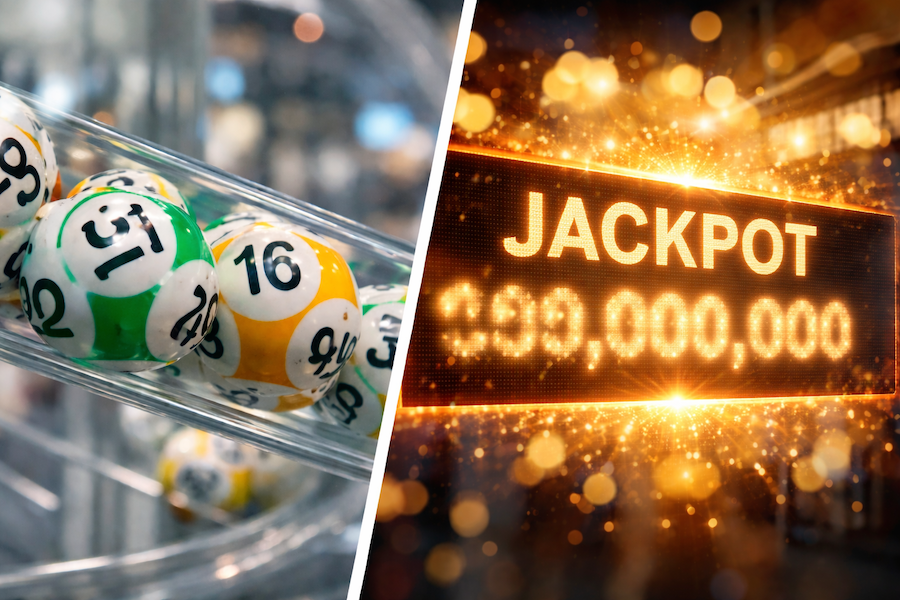
When a jackpot reaches an unusually high amount, something changes.
Not the odds.
Not the system.
What changes is perception.
The same lottery draw can go unnoticed for weeks and suddenly become a widespread topic of conversation. Media outlets highlight it. Social media amplifies it. Conversations begin with a number.
But what really happens when the jackpot grows?
The Prize Size as a Psychological Trigger
The brain does not process $5 million the same way it processes $150 million.
Even if both figures represent identical odds, the emotional impact is different. Extreme magnitudes activate imagination more intensely and expand the mental scenario.
It is not the same to imagine “solving problems” as it is to imagine “changing your life.”
This phenomenon connects with what we explored in: Why We Keep Dreaming About Winning the Lottery
When the number becomes extraordinary, the brain does not just calculate — it projects. And the larger the magnitude, the stronger the internal narrative we build.
What Happens in the Brain When the Jackpot Surges
A record-breaking jackpot activates three main mechanisms:
Amplified anticipation
Extreme figures increase reward expectation. Anticipation itself generates an emotional response even before the draw takes place.
Non-linear perception of large numbers
The brain does not process very large quantities proportionally. Between $5 and $10 million there is a rational difference. Between $100 and $150 million, perception becomes symbolic rather than mathematical.
Shared social activation
When the jackpot is historic, collective conversation reinforces the event’s relevance. What seems important to many people is interpreted by the brain as significant.
The jackpot effect does not change the mathematics of the draw; it changes the emotional magnitude we project onto it.
Constant Probability, Variable Perception
From a mathematical perspective, nothing changes.
Each combination still carries the same probability.
However, a larger jackpot alters the feeling of opportunity.
This contrast between real data and emotional perception connects with what we explain in: How to Get Informed Before Playing the Lottery Online
Understanding this difference helps maintain clarity when making a decision.
The Social Effect of a Record Jackpot
As the jackpot grows, so does the conversation.
Not because the odds change, but because the narrative changes.
Extraordinary numbers create headlines.
Headlines create attention.
Attention creates participation.
We explore this further in: How Social Influence Affects the Decision to Play the Lottery
The jackpot functions as an amplifier, not a guarantee.
The Jackpot as an Amplifier, Not an Advantage
A higher jackpot does not increase your chances of winning.
What increases is attention.
And attention modifies the experience: more people check the draw, more headlines appear, and more conversations take place.
Understanding the jackpot effect helps distinguish between emotional magnitude and real probability.
Participating can be a valid personal choice.
The important thing is not to confuse size with mathematical advantage.
Participating with Context
The size of the prize can be a legitimate stimulus.
Excitement is part of the experience.
But when we understand how the jackpot effect works, we can make more balanced decisions — even in the face of record-breaking numbers.
The key is not to ignore emotion, but to understand it.
FAQs – Frequently Asked Questions
Does a bigger jackpot increase the odds of winning?
No. The probabilities remain the same regardless of the accumulated amount.
Why do more people participate when the jackpot is record-breaking?
Because the size of the prize increases media attention and social conversation.
Is it irrational to play only when the jackpot is high?
Not necessarily. It can be a personal decision, as long as expectations remain realistic.
Does the jackpot effect influence how we remember the results?
Yes. The larger the figure, the stronger the emotional impact and the associated memory of the draw.